Harbin Institute of Technology
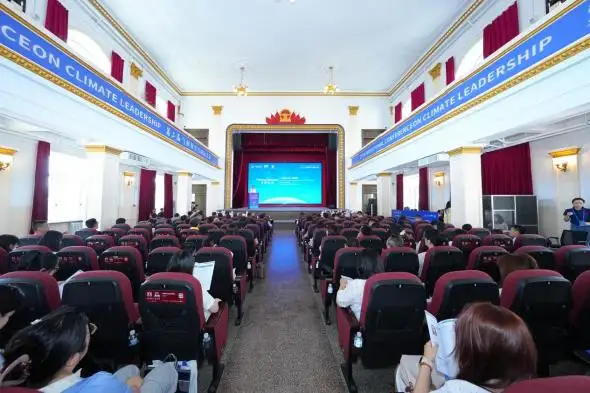
The 2nd International Conference on Climate Leadership was held in Harbin, the Summer Capital, from July 18 to 20, 2026. Co-hosted by the Business School, Harbin Institute of Technology, the Bartlett School of Sustainable Construction, UCL, and the Chinese Economic Association UK/Europe, the conference gathered over 300 experts and scholars from 111 universities and research institutions across 23 countries and regions. Together with representatives from international organisations including the United Nations Development Programme (UNDP), businesses, and leading academic journals, participants explored cutting-edge developments and global practices in climate leadership, contributing Chinese wisdom and solutions to global climate governance. The Climate Leadership Initiative , jointly proposed by HIT and UNDP, was officially launched at the conference.
The conference featured a world-class academic lineup, with keynote speakers including fellows of the Royal Society of Canada, the Academy of the Social Sciences in Australia, the European Academy of Sciences, and the Royal Society of Edinburgh, as well as editors-in-chief of leading journals including Academy of Management Journal and Review of Economic Studies . Distinguished experts also included a former Deputy Director of the Regional Cooperation Division, the United Nations Environment Programme (UNEP), an Executive Council Member of China Energy Research Society, and an assistant resident representative of UNDP in China. Covering management, economics, and environmental science, the speakers represented the global frontier in the field.
Meanwhile, editors-in-chief from more than 10 leading journals, including Nature Portfolio and Cell Press journals, gathered at the Journal Editors Session to discuss frontier trends. Five international organisations - UNDP, UNEP, WWF, WRI, and CBI - participated extensively, with UNDP firstly organizing its dedicated joint session, highlighting the conference's international influence.
The conference jointly launched The Climate Leadership Initiative , highlighting the role of science, technology, and business disciplines in connecting climate technology innovation, business practices, and governance decision-making. It calls for stronger collaboration among business schools, science and engineering faculties, research institutions, and enterprises, marking HIT's significant step in leveraging its unique disciplinary strengths to help Chinese universities shift from participants to leaders in global climate governance.
As a leading university integrating science, technology, and business education, HIT has built an international platform for collaboration. From convening global scholars to launching the initiative, HIT has demonstrated through concrete actions that Chinese universities can serve not only as participants, but also as agenda setters and drivers in global climate governance. With an open mindset, this century-old engineering powerhouse is contributing Chinese solutions to global sustainable development.
Source: Harbin Institute of Technology