Underscoring the Role of SAF and the Aviation Industry's Adaptation
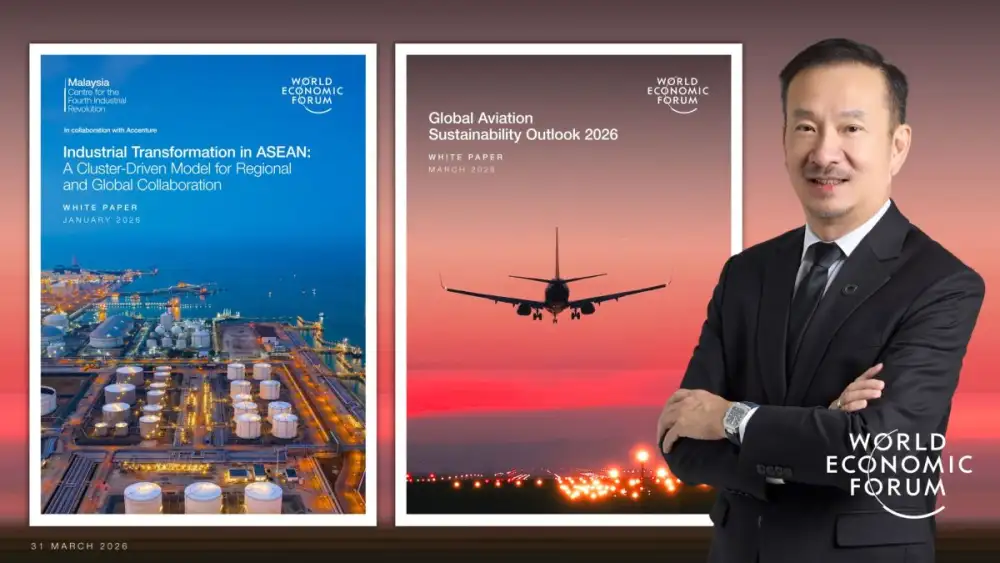
the World Economic Forum (WEF) released two major reports; Global Aviation Sustainability Outlook 2026 and Industrial Transformation in ASEAN: A Cluster-Driven Model for Regional and Global Collaboration, highlighting pathways toward the Net Zero transition across both the aviation sector and regional industries.
Mr. Chaiwat Kovavisarach, Group Chief Executive Officer and President of Bangchak Corporation Public Company Limited, contributed insights to both reports. In the Industrial Transformation in ASEAN report, he stated: "Building a sustainable aviation fuels (SAF) plant is only half the journey. Without a clear policy mandate and government incentives, airlines remain reluctant to commit to long-term SAF offtake agreements. What would unlock real scale are binding blending targets, tax or subsidy support to bridge the price gap and recognition of certified feedstocks under global standards. With such a policy backbone in place, capacity expansion and airline adoption could progress much faster."
He further emphasized that the transition to sustainability cannot be driven by any single sector alone, but requires system-wide collaborationparticularly through cluster-based approaches that connect industries, supply chains, and infrastructureto enable meaningful progress at the regional level.
The Industrial Transformation in ASEAN report, published in January 2026, highlights ASEAN's strong potential to become a key hub for energy and industrial transition, provided that cross-border and cross-sector collaboration is effectively fostered through cluster-based models. Such collaboration can enhance efficiency, reduce costs, and accelerate investment in emerging technologies.
Meanwhile, the Global Aviation Sustainability Outlook 2026, developed in collaboration with executives from over 100 organizations worldwide, outlines the "dual reality" facing the aviation sector: continued growth in travel demand alongside increasing pressure to reduce carbon emissions. As a result, future growth must be managed within constraints related to cost, technology, policy frameworks, and supply chains.
The report identifies Sustainable Aviation Fuel (SAF) as a critical lever in the near to medium term, despite ongoing challenges related to cost and feedstock availability. At the same time, alternative technologies such as e-fuels and hydrogen will require further development, while digitalization and AI-driven optimization offer important near-term opportunities to enhance operational efficiency.
In the report's Foreword, reflecting the collective perspective of global industry leaders, including Mr. Chaiwat, it is noted that while the aviation industry remains committed to achieving Net Zero, it must "adjust its trajectory" to align with real-world constraints, including cost, technology readiness, and a rapidly evolving global context, to ensure that the transition remains practical and achievable.
The Foreword also highlights the principle of being "ambitious but pragmatic"pursuing decarbonization with determination while remaining grounded in operational realities. This includes prioritizing deployable technologies, sequencing investments, and managing risks effectively. Achieving Net Zero, it emphasizes, will require coordinated action across governments, industry, and the financial sector.
Bangchak Group's contribution to both reports reflects the role of Thai organizations in global collaboration platforms, as well as its commitment to advancing a sustainable energy and industrial transition.
The full reports are available at:
- https://www.weforum.org/publications/global-aviation-sustainability-outlook-2026
- https://www.weforum.org/publications/industrial-transformation-in-asean-a-cluster-driven-model-for-regional-and-global-collaboration/