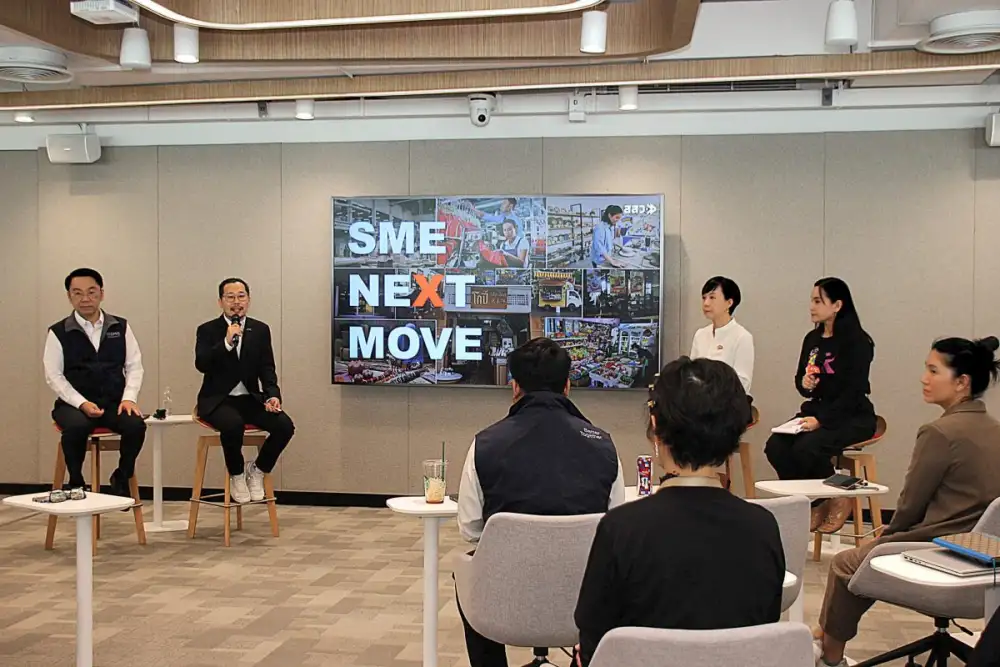
Thailand's small and medium-sized enterprises (SMEs) are entering a pivotal period in 2026 as consumer spending remains uneven, operating costs stay elevated, and digital competition continues to reshape the business landscape. In response, Krungthai Card Public Company Limited (KTC), The Office of Small and Medium Enterprises Promotion (OSMEP), and the Thai SME Confederation jointly hosted the 26th edition of KTC FIT Talk under the theme "SME Next Move: New Survival Strategies in a Business World Unlike Before."

The forum brought together leaders from the public and private sectors to examine the future of Thailand's SME sector. Participants agreed that data-driven decision-making and effective cash flow management are becoming more important than sales growth alone in determining business resilience and long-term competitiveness.
SMEs remain the backbone of the Thai economy. According to OSMEP, Thailand has approximately 3.3 million SMEs, representing 99.5% of all enterprises nationwide and employing more than 13.6 million people, equivalent to around 70% of the country's private-sector workforce. OSMEP expects SME GDP to grow between 2.0% and 2.8% in 2026, supported by tourism, services, and exports. However, entrepreneurs continue to face challenges from high household debt, low-cost imports, global economic uncertainty, and the rapid transition toward a digital economy.
Mr. Vorapoj Prasanpanich, Inspector-General of The Office of Small and Medium Enterprises Promotion (OSMEP), said Thai SMEs are facing a major structural shift driven by demographic change, productivity challenges, and the need to create higher-value products and services. "Today's consumers are no longer making purchasing decisions based solely on price. They increasingly value experience, differentiation, and innovation. At the same time, many SMEs still struggle to access financing and business development tools because they lack formal financial records, standardized accounting systems, or sufficient credit history."
"OSMEP is expanding its role beyond business promotion to include capability development, risk reduction, technology adoption, and easier access to government support programs. Businesses that will succeed in the future will not necessarily be the biggest. They will be the ones that adapt the fastest, leverage technology effectively, and use customer insights to create value."
Dr. Noppong Theeravorn, President The Federation of Thai SME, noted that more than 84% of Thailand's MSMEs are micro-enterprises and continue to serve as a crucial foundation for the country's services, trade, and manufacturing sectors. "SMEs are no longer competing only with neighboring businesses. Today, they are competing with sellers across the country and around the world through a single smartphone screen. The biggest challenge is not that SMEs do not know what they need to do. Many understand the issues they face, but they often lack the resources required to act. Many businesses are still struggling to access new markets, utilize business data effectively, and connect with larger supply chains. Businesses that thrive in the future may not be those generating the highest sales. They will be those that manage liquidity effectively, make smart use of data, and adapt quickly to market change."
Looking ahead, he encouraged SMEs to explore opportunities in Thailand's future growth industries, including high-value agriculture and food processing, quality tourism, creative industries, health and wellness, AI, and digital technology.
Ms. Naowarat Keratikasemsook, Head of Merchant Acquiring Business at KTC, said "Our experience with merchants across Thailand shows that consumers continue to spend, but they are increasingly using a wider variety of payment methods. Payment is no longer merely a transaction tool; it has become a business growth driver. According to Payment Data Indicators published by the Bank of Thailand, digital payment transactions continue to grow across multiple channels, including credit cards, debit cards, PromptPay, e-money, and mobile banking. This reflects increasingly diverse consumer preferences and reinforces the importance of offering multiple payment options. When customers cannot pay using their preferred method, businesses risk losing sales immediately. Payment acceptance has become a critical factor influencing conversion rates and customer retention."
"KTC currently provides digital payment solutions for both physical and online merchants, supporting major card schemes, PromptPay, and Alipay+ e-wallets from more than 30 markets. During the first five months of 2026, transaction volume among KTC merchants grew 6.8%, while transaction value increased 7%. Online payment
transactions rose 13.8%, and payments from international tourists through Alipay+ and credit cards surged 19.6%, with average spending exceeding THB 4,000 per transaction."
"Data helps entrepreneurs understand customer behavior, identify peak sales periods, optimize inventory, improve marketing efficiency, and manage working capital more effectively. The businesses that gain a competitive edge in the future will be those that understand their customers best. KTC's merchant services are built around four key strengthsSpeed, Service, Stability, and Security. We help merchants improve cash flow through fast onboarding, same-day settlement into Krung Thai Bank accounts, 24/7 merchant support, system reliability, and internationally recognized security standards."
KTC's payment infrastructure is certified under PCI DSS and complies with ISO/IEC 27001:2022 and ISO/IEC 27701:2019 standards, reinforcing data security and privacy protection for both merchants and consumers.
The forum concluded that future SME success will depend not only on generating sales, but also on maintaining strong cash flow, leveraging data effectively, adopting relevant technologies, and responding quickly to changing market conditions. As Thailand's business environment becomes increasingly dynamic, the competitive advantage will belong not necessarily to the largest companies, but to those that can learn, adapt, and act the fastest.
Experts from the public sector, the Thai SME Confederation, and KTC agreed that future SME success will depend less on sales volume alone and more on the ability to manage liquidity, utilize data effectively, adopt appropriate technologies, and respond proactively to changing market conditions. To strengthen competitiveness in the digital economy, SMEs should focus on four key areas: maintaining transparent financial and accounting systems, exercising disciplined cash flow management, leveraging customer and sales data for decision-making, and implementing payment technologies that align with evolving consumer behavior.
Entrepreneurs interested in deploying digital payment solutionsincluding EDC terminals, QR Payment, Online Payment Gateway services, and international payment acceptancecan consult KTC's merchant specialists by calling 02 123 5700 or visiting www.ktc.co.th/merchant. Applicants should operate a legally registered business, maintain a clear sales channel or business location, and prepare basic documentation, including identification, business registration documents, bank statements, and a Krung Thai Bank account.
The "SME Next Move" forum reinforced a critical message for Thai businesses: in 2026, success will not be defined solely by sales growth. Rather, competitive advantage will belong to businesses that deeply understand their customers, make effective use of data, and manage liquidity with discipline and agility. In a world where change has become the norm, the businesses most likely to thrive will be those that adapt the fastest.