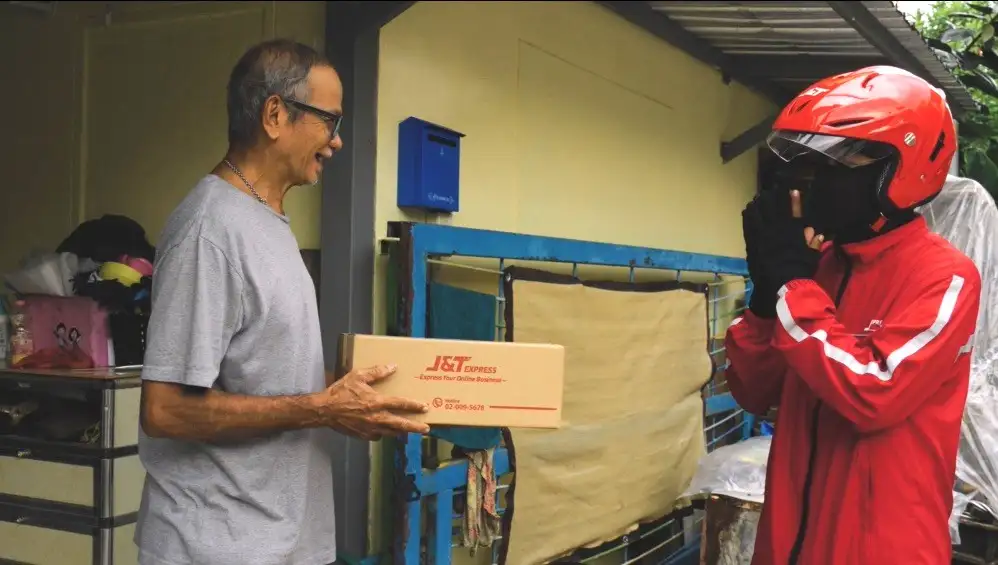
Nan, one online shopper, shared her experience with delivery services that In the past, ordering during peak seasons usually meant waiting several days for items to arrive -- and sometimes parcel statuses wouldn't update for long periods. But during this year's 11.11 campaign, many of her orders were delivered the very next day, or within just one to two days after purchase.
"Normally, online orders used to take around 2-4 days to arrive. And during the end-of-year peak season, you'd have to wait a whole week just for delivery. But these days, courier services have become so much faster -- some items even arrive within just one day. I think the delivery industry is doing an excellent job!"
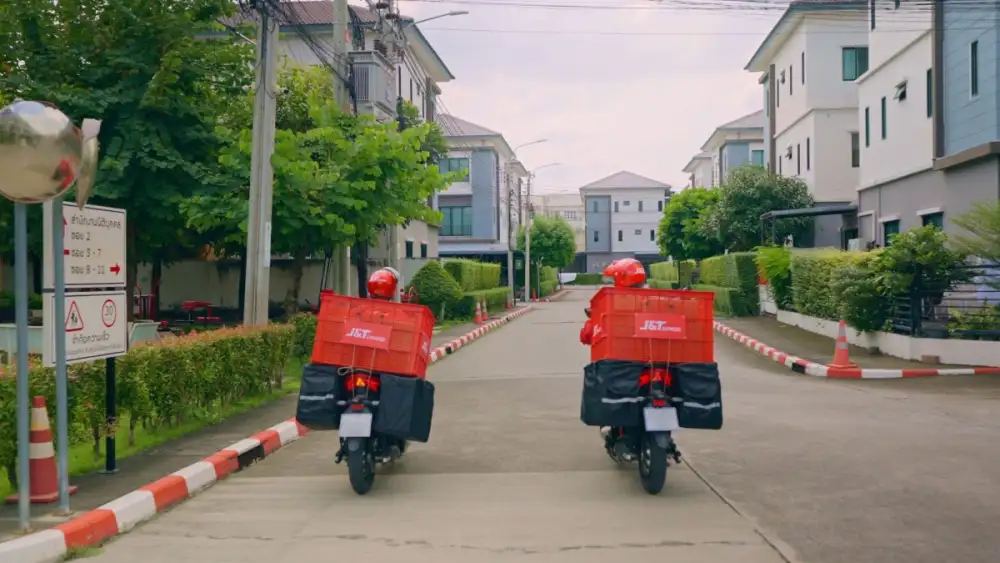
Behind these faster delivery times lies more than just efficiency at the final doorstep stage -- it is the result of careful management across the entire operation. Crucially, schedules and delivery rounds are now planned and dynamically adjusted to match fluctuating parcel volumes at every peak period.
Panachai, a delivery rider at J&T Express's Khlong Toei branch, shared his experience that his coverage area is a quieter neighbourhood with several massage parlours, so it's not usually busy. But during major shopping festivals, parcel volumes rise noticeably. For this year's 11.11 campaign alone, their branch handled over 20,000 parcels a day. they had to adjust our working methods during these high-volume periods to ensure every delivery remained efficient and on schedule.
"When volumes are high, we simply have to plan our work more carefully. Personally, I start early -- I'm out delivering parcels from as early as 7.00 a.m., and I increase my delivery rounds to 3-4 trips a day so I can get everything delivered on time. We still keep every single step just as thorough, though -- making sure service quality stays exactly the same."
Beyond optimising delivery rounds, automated sorting systems at branches have also significantly boosted speed and accuracy. They reduce manual sorting time and free up staff to focus on actual deliveries. Take the Khlong Toei branch as an example -- even with a large team, each courier still handles hundreds of parcels daily. In the past, limited sorting capacity meant backlogs during major campaigns could take weeks to clear. Now, parcels move out of the warehouse noticeably faster, and the number of items each staff member can sort has effectively doubled.
Likewise, Nuttawut, a courier at the Wang Thonglang branch, shares his experience that before they got the automated sorter, sorting parcels by hand took us hours every day. But since bringing in the technology, that whole process is so much faster -- they can start delivering sooner and everything's more accurate. It's made a huge difference, especially when our nightly volume suddenly jumps from 10,000 items to anywhere between 15,000 and 19,000 parcels overnight.
"Back when we sorted everything by hand, it took forever -- we'd barely be ready to head out on the road by almost 10 a.m. During big campaigns, it was honestly overwhelming. Now with the machine handling all that, I can focus entirely on getting parcels delivered. I start early, load up more items at once, and I actually still have extra time to help my colleagues distribute parcels too."
While improved efficiency at the branch level ensures faster and more accurate last-mile delivery, sorting operations at central distribution centres are equally critical in managing overall network volumes -- especially during peak festivals when parcel numbers surge. The adoption of automated sorting technology is therefore a key factor in boosting overall processing efficiency and expanding handling capacity across the entire network.
Nipaporn, Operations Manager at the North Bangkok Distribution Centre, explained: "This new automated sorting equipment alone has boosted our sorting efficiency by more than 15 times! What's more, the automated system makes our entire operation more consistent and reliable, so we can handle far more parcels every single day.
The ongoing evolution of Thailand's logistics sector extends far beyond faster delivery times alone. It encompasses comprehensive network management, strategic resource planning, and proactive preparation to accommodate shifting consumer patterns and fluctuating parcel volumes. During major shopping festivals in particular, when order volumes surge sharply, service providers must build greater operational flexibility -- across sorting capacity, workforce deployment, and resource allocation -- to maintain consistent service quality. Ultimately, leading logistics operators are prioritising scalable infrastructure and long-term planning as core pillars of their operational strategy.
Beyond sorting technology, accurate volume forecasting, workforce management, and contingency planning are equally vital in maintaining seamless operations -- particularly during periods of rapid growth or when weather conditions impact service. This reflects a key truth: competition in today's logistics industry is no longer defined by delivery speed alone. True excellence lies in the ability to manage entire systems that respond efficiently and reliably to ever-changing market demands.