In recent years, bananas have evolved beyond being a mere tabletop fruit or a simple home snack. They have transformed into a trending flavor profile featured in modern culinary delights, from artisan pastries and plant-based desserts to the healthy snacks currently dominating social media feeds. Bananas are celebrated for their versatility and familiarity, aligning perfectly with the growing global preference for natural, wholesome foods.
Globally, banana production and consumption reached approximately 135 to 139 million tons in the recent 2022 to 2024 period. This figure is projected to grow by 1.4% annually, reaching 166 million tons by 2034, fueled by population growth and health-conscious consumer trends. In Asia, however, the supply chain faces significant hurdles due to climate change, including extreme weather patterns, crop diseases, and land conversion, leading to fluctuations in both availability and price. This environment has turned the spotlight toward sustainable, community-based banana sourcing, particularly in tropical Asian regions where domestic production is high but vulnerable to environmental degradation.
Community-led banana enterprises are strengthening Thailand's rural economy by embedding local wisdom into modern production systems. In Ratchaburi Province, the KumThong Dried Banana Community Enterprise has scaled operations to process bananas annually into dried products, syrups, and facial masks. With organized member groups managing farmland, these enterprises emphasize poverty reduction, standardized quality, and eco-friendly processing methods, reducing reliance on chemical-heavy monocropping while creating value-added goods for domestic and export markets.
These initiatives reflect Thailand's broader sustainability push, where community enterprises generate income while preserving cultural practices. Reports highlight that banana cooperatives across provinces collectively produce thousands of tons of processed bananas each year, integrating banana fibers into the One Tambon One Product (OTOP) program to create crafts and eco-friendly goods. By combining traditional knowledge with modern hygienic standards, Thailand's banana cooperatives are positioning the country as a regional leader in community-driven, sustainable banana cultivation and processing, ensuring resilience against monocropping risks while meeting rising consumer demand for sustainable products.
In Indonesia, bananas grow in nearly every region. But in Penyandingan Village, Muara Enim Regency, South Sumatra, the banana is more than just a trend; it is part of a deep-rooted narrative involving customary forests, female empowerment, and the protection of living spaces. From the groves and forests to small production kitchens, the banana has become a medium for a slow but profoundly impactful social transformation.
The Ghimbe Pramunan Customary Forest and the Semende Heritage
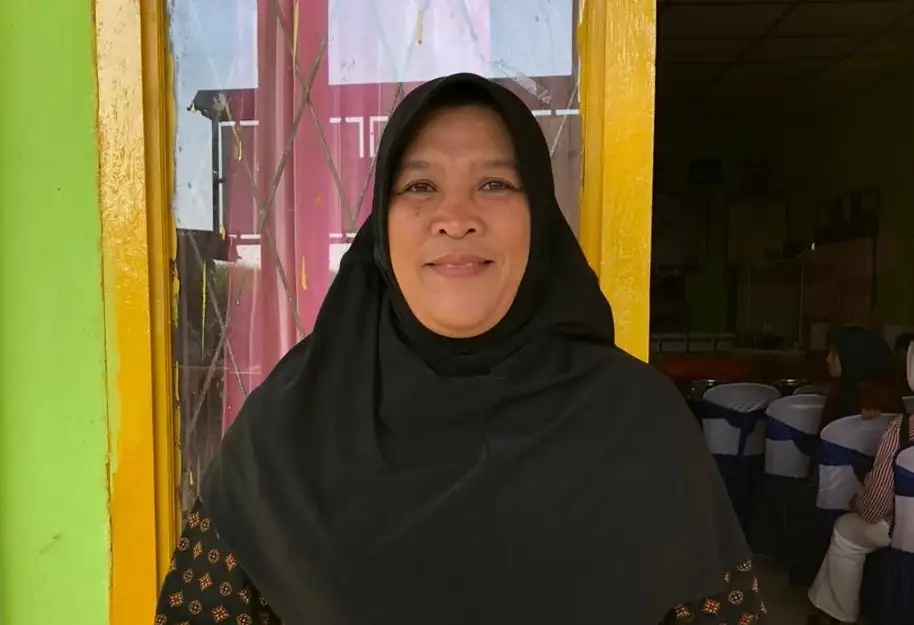
The initiative to protect the customary forest in Muara Enim is driven by women. Among them is Mrs. Anita Tasriah (46), a resident of Penyandingan Village who actively organizes local women to guard the Ghimbe Pramunan Customary Forest. Drawing from her daily connection to the forest as a source of food and livelihood, Anita has become a pivotal figure linking traditional indigenous knowledge with collective female action to ensure environmental sustainability.
The Ghimbe Pramunan Customary Forest covers 43.7 hectares and serves as the lifeblood of the community. It holds extraordinary natural wealth, from rivers and waterfalls to indigenous trees like benzoin (menyan), medang, and coffee, alongside resources like rattan, bamboo, and wild bananas. The ecosystem remains preserved thanks to the Semendecustomary system, which upholds the concept of tunggu tubang. Under this tradition, the inheritance of family wealth is entrusted to the eldest child with the sacred mandate to protect it and avoid over-exploitation.
"This forest has been guarded by our ancestors since long ago. There are boundaries, there are rules. It must not be damaged," says Anita Tasriah, who serves as the Chairperson of the Anak Belai Women's Social Forestry Business Group (KUPS) and Secretary of the Ghimbe Pramunan Customary Forest Management Institution (LPHA).
Vigilance Against Environmental Threats
Awareness of forest conservation was forged through trial. In the areas surrounding Penyandingan Village, illegal logging has often encroached upon customary lands. Unauthorized timber extraction, especially at the borders, has historically triggered landslides and fallen trees during the rainy season.
In response, the LPHA Ghimbe Pramunan was established as a pillar for sustainable forest management. Its 39 members are divided into two business groups, which are the KUPS Perempuan Anak Belai (Women's Group) and the KUPS Puyang Sure Aek Ghibe (General Resource Group).
A central focus of this structure is female leadership in forest monitoring. "When heavy rain falls and the river suddenly turns murky, it is a sign that there is trouble upstream. Usually, the women are the first to notice," Anita explains. The women conduct scheduled monitoring along specific trails to record physical changes, from water flow conditions to signs of logging. They also assess the availability of bamboo, rattan, and banana plants to ensure harvesting remains within sustainable limits. These findings are discussed in monthly meetings to determine preventative actions or the enforcement of customary sanctions.
Following the formal legal recognition of the forest via a Decree from the Ministry of Environment and Forestry, customary rules have been further strengthened. Today, felling large trees without customary permission results in strict sanctions, ranging from formal warnings to the traditional obligation of sacrificing a buffalo according to local provisions.
From Simple Kitchens to Value-Added Innovation: KUPS Innovation and PINUS Stewardship
In 2023, the desire to protect the forest evolved into an economic endeavor with the formation of the KUPS Perempuan Anak Belai. The group consists primarily of 24 housewives and 10 elderly women skilled in food processing and bamboo weaving.
Under the guidance of the LPHA, the banana was chosen as a strategic focus. It was integrated into agroforestry and conservation plots as an economic entry point that does not harm the forest. Bananas are a safe commodity because they do not degrade the soil, they harvest quickly, and they offer versatile uses.
"Initially, we made banana chips only for our own needs or to serve village guests. The process was very simple, using traditional knives we call kuduk," Anita recalls. Early production lacked professional standards, using plain plastic bags tied with rubber bands and lacking proper oil-draining techniques.
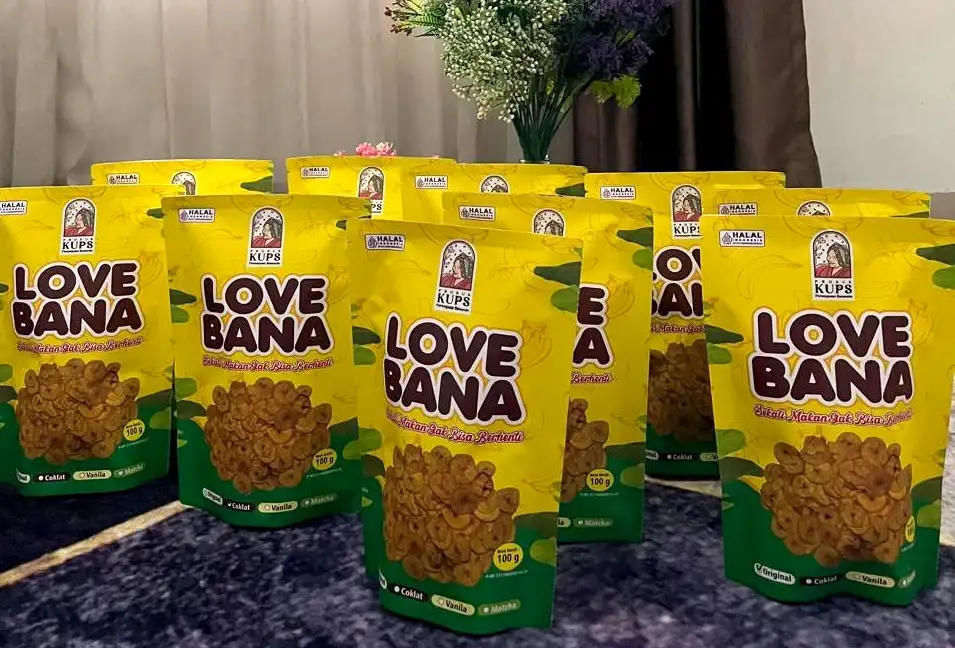
The birth of the Love Bana brand marked a significant shift. Through assistance from PINUS South Sumatra, the group improved production efficiency and quality consistency. Crucially, they retained the use of the traditional kuduk and anak belati knives, preserving their cultural heritage as a unique selling point.
"We do not just help residents make a finished product; we accompany the process so that women gain confidence, hold positions in decision-making, and ensure their businesses are sustainable," says Yunita Sari, Director of PINUS South Sumatra. This partnership covers everything from institutional strengthening and administrative setup to securing legal permits like Business Identification Numbers (NIB) and Halal certification. With this, PINUS also emphasizes the involvement and role of women in governance and decision-making regarding natural resources in Penyandingan village.
Economic Impact and National Recognition
The economic benefits are already being felt. The group has recorded a 4% increase in local community income, and is hoping to continue to increase from the collective product line. While modest, this represents vital supplementary income for households, involving 24 direct beneficiaries in production, packaging, and marketing.
Beyond finances, the environmental impact is tangible. The women of KUPS Anak Belai have planted approximately 100 banana trees across a 1-hectare agroforestry plot. This effort, supported by the village government and local forestry authorities, serves as both environmental restoration and a sustainable raw material source.
Anita's journey has taken her far beyond the village. She has become a speaker at prestigious forums, including the 2025 International Regional Science Association Conference and national workshops following COP 30 in Belem, Brazil. Her story has been featured at the Javara Food Artist School and the Puan Rimba Pop Up Market in Jakarta, gaining coverage from national media outlets like CNN Indonesia and Trans7.
For Anita, the goal remains clear: "I want to see more village women become confident, earn an income, and remain active guardians of the forest. If the forest is destroyed, we lose everything."
Through the humble banana, which is now a global favorite, Penyandingan Village demonstrates that a restorative economy based on local food can coexist with forest protection and social justice. In the hands of these women, the banana is more than a commodity. It is a bridge between the kitchen, the customary forest, and a more sustainable future.