Co-hosted with the Commission on Asian Philanthropy, the high-level Bangkok summit brings together public, private and philanthropic leaders to strengthen a cohesive philanthropic ecosystem, linking local to regional efforts with Thailand's national priorities in innovation, human development, and environmental sustainability.
KASIKORNTHAI Foundation, in partnership with the Commission on Asian Philanthropy, hosted 'Asia's Philanthropic Future: Catalyzing Growth and Partnership' on 17 October 2026 at Mandarin Oriental, Bangkok. Held as an official side event of the IMF-World Bank Group Annual Meetings 2026, the exclusive gathering convened over one hundred senior policymakers, global development leaders, philanthropists, and business executives to establish coordinated pathways for cross-sector collaboration.
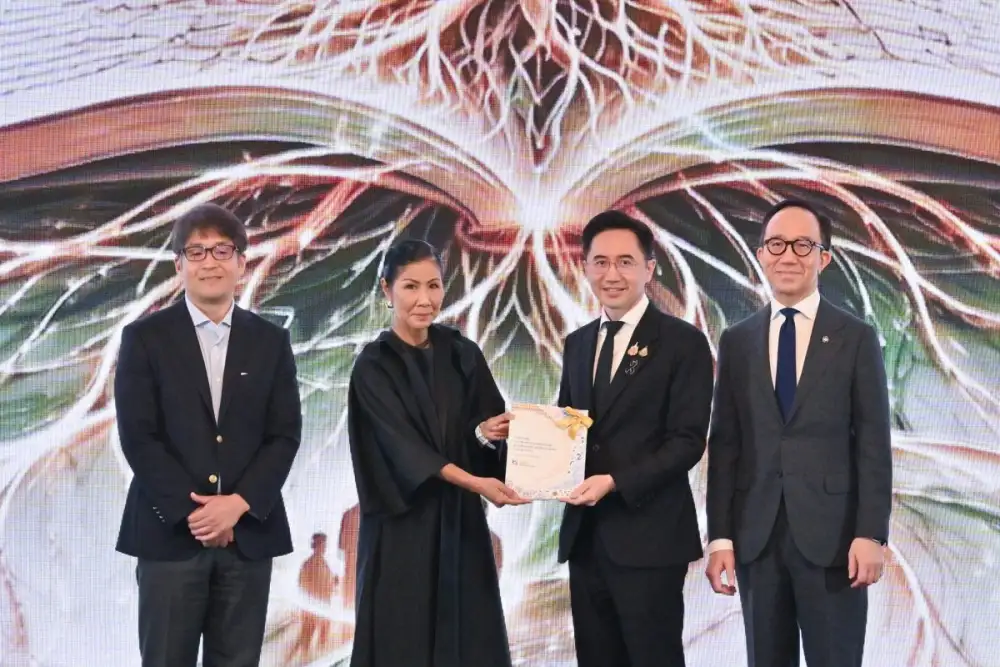
The landmark event marked the official launch of the Thai-language edition of the Commission's Interim Report. The Report highlights the potential of regional philanthropic funding in supporting the national agenda. The commission estimates that domestic monetary giving in its jurisdictions reached $109 billion in 2024, equivalent to more than $1 trillion over the next decade. The publication also provides Thai policymakers and philanthropic organizations with localized data and regional playbooks to better align philanthropic giving with national development goals.
Delivering the keynote address, H.E. Prof. Dr. Yodchanan Wongsawat, Deputy Prime Minister and Minister of Higher Education, Science, Research and Innovation of Thailand, outlined the country's developmental "demand side" where philanthropic collaboration is most critical. He highlighted nature-positive and community uplifting as areas where patient, flexible private capital can successfully scale state initiatives. He emphasized that research institutions, universities, and innovation agencies will be instrumental in channeling this giving into tangible talent and scalable solutions.
"Good intentions go much further when systems support them," said Ms. Kobkarn Wattanavrangkul, Chairperson of KASIKORNTHAI Foundation. "Through the Foundation and our partnership with the Commission, we are bringing regional knowledge into locally relevant conversations, offering our capabilities and long-term networks to address the challenges that matter most to Thai society."
Dr. Gabriel Leung, Director of the Institute of Philanthropy, and Mr. Ichiro Kabasawa, Executive Director of The Nippon Foundation, Co-Convenors of the Commission also emphasized the shared evidence and regional connections the Commission has built, and how these can support stronger collaboration and action across Asia.
To demonstrate on-the-ground execution, Dr. Xiao Liming, Secretary-General of the Tencent Charity Foundation, highlighted leveraging core digital technologies to connect communities and reduce collaboration costs, building long-term societal resilience through strategic partnerships between corporations, governments, and social organizations.
In addition, Mr. Banthoon Lamsam, Chairman Emeritus of KASIKORNBANK, presented the "Nan Sandbox" model. The initiative illustrates how leveraging corporate capabilities can bring together public sector, private sector and local communities to connect forest restoration with sustainable local livelihoods, youth education, and community healthcare. The Nan Sandbox Project also serves as a key model for addressing forest encroachment and advancing sustainable community development, which can be applied to other areas across the country in the future.
Underscoring success factors of the on-the-ground execution, a high-level panel discussion brought together Mr. Arturo Franco, Director, Group Strategy Office, The World Bank Group, Dr. Somkiat Tangkitvanich, President, Thailand Development Research Institute (TDRI), Mr. NG Boon Heong, Executive Director and Chief Executive Officer, Temasek Foundation, and Puan Siti Kamariah Ahmad Subki, Managing Director and Trustee, Yayasan Hasanah. The panel emphasized that philanthropy's true value extends far beyond grantmaking, lying in the deployment of non-financial assets like corporate networks and community trust to coordinate resources and complement public sector efforts. Furthermore, the speakers concluded that translating successful local pilots into sustainable, system level solutions requires early collaboration between market, community, and government actors to secure long-term, feasible financing pathways.
The event concluded with special remarks by Mr. Chen Guangzhe, World Bank Group Vice President for Planet, who highlighted a key partnership between the World Bank, KASIKORNTHAI Foundation, and Thailand's National Economic and Social Development Council (NESDC) to pilot Natural Capital Accounting in Nan. "Philanthropy brings the unique capacity to experiment, cultivate community relationships, and establish the evidence needed to crowd in larger pools of public and private finance," noted Mr. Chen.