What if travel could be more than just an experience for tourists, while also benefiting local communities and the environment? In Siak, Riau, Siak Eco Wonders brings together the richness of the Siak River, Malay culture, local cuisine, and community life into sustainable tourism experiences, while creating economic opportunities for local MSMEs (micro, small, and medium-sized enterprises) and communities and supporting the preservation of Siak's natural and cultural heritage.
In the global and Asia Pacific regions, the trend for sustainable tourism continues to rise. More than 80% of travelers in Asia Pacific state that they choose destinations with environmentally friendly practices and local community involvement. The market value for sustainable tourism in this region reached 1.037 trillion USD in 2024 and is expected to grow at an annual rate of 14.45%, reaching 2.668 trillion USD by 2031. However, in many areas, the potential for nature and culture-based tourism has not yet been managed optimally.
In Siak Regency, Riau, this potential exists through its rivers, Malay historical heritage, local culinary arts, and the lives of coastal communities. From this foundation, Siak Eco Wonders was born, an experience-based tourism initiative developed by Skelas alongside various local stakeholders.
From River Potential to Empowering Tourism Experiences
Siak Eco Wonders began by utilizing the Siak River, which has long been known primarily as a transportation route and a center for community activities. Through collaboration with Benteng Berdaulat and local Tourism Awareness Groups (Pokdarwis), the traditional sampan is no longer just a crossing tool, but has become a gateway to experiencing the city of Siak from a cultural and historical perspective.
Taufiq Nurrohim, the Business Development of Skelas, explains that this initiative was born from a desire to develop Siak's tourism sustainably. "We saw great potential in Siak, but the management was not yet maximized. It was not because it was wrong, but because things were not yet connected and packaged well," he said.
Siak Eco Wonders has developed several service units, ranging from meeting packages and dinner experiences to tour packages. For meetings, the average client group numbers 30 to 40 people, with about two packages sold per month to corporate CSR programs or government agencies. For dinner experiences, the number of guests can reach around 100 people coming from various regions.
The tour packages are designed not just as visits, but as experiences. Tourists are invited to cycle around the city of Siak using wooden bicycles, traversing heritage areas such as the Siak Palace, Syahabuddin Mosque, and the Balai Kerapatan. One unique experience is listening to the sound of the komet music box, a rare musical instrument left behind by the Sultan of Siak. Only two remain in the world, in Germany and in Siak, and only in Siak can this instrument still be played.
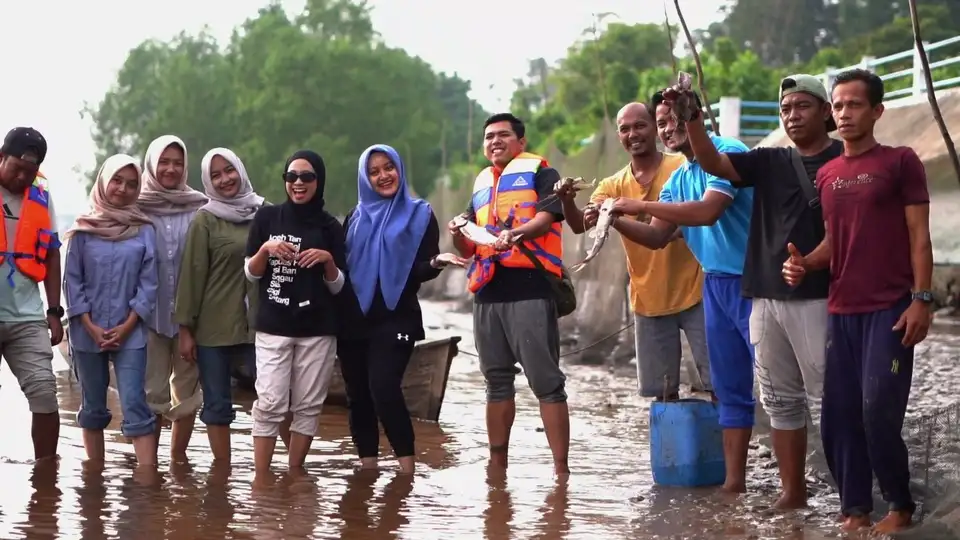
Other packages take tourists to the Pinaloka pineapple processing center for a baking class to make nastar cookies, and to Alam Siak Lestari to see cork fish processing, which is closely linked to efforts to protect the peat ecosystem. There is also the experience of joining Siak River fishermen, setting nets as the tide goes out in the afternoon and collecting fish in the morning.
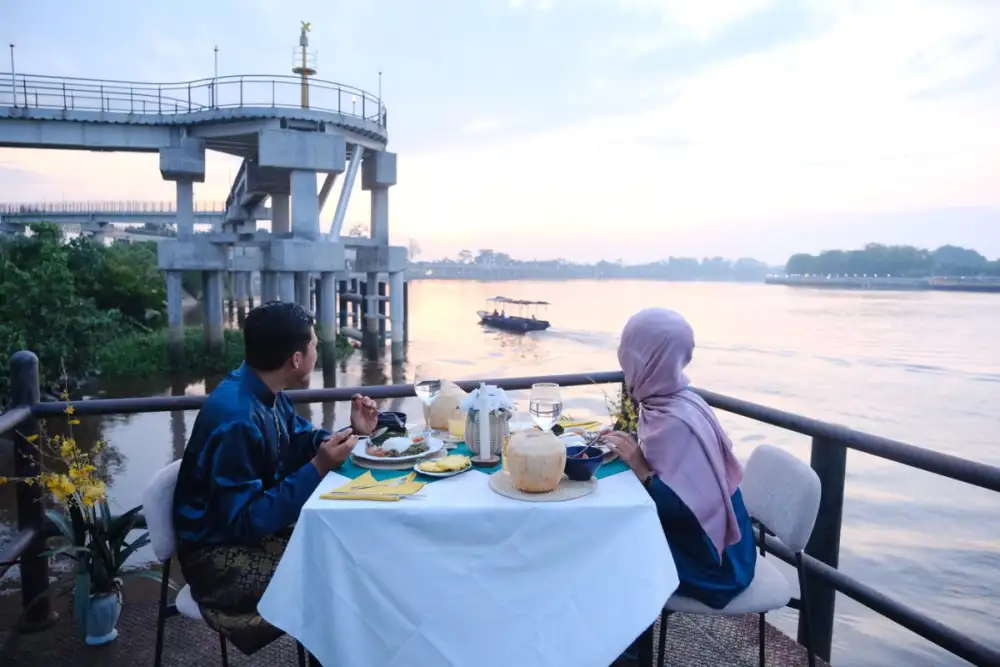
For every dining experience, Siak Eco Wonders avoids large catering services. Food is prepared by the people of Benteng Hulu Village with a typical Malay menu such as asam pedas patin fish, salais fish, tapah fish, and juara tumbuk. One signature experience is makan beranyut, a fisherman's tradition of enjoying a meal on a sampan while following the river's current.
Skelas Incubation and Low Impact Tourism Practices
The development of Siak Eco Wonders did not happen in isolation. Skelas utilized its previous mentoring experience, including the management of Siak River Land, as the foundation for building this tourism unit. Skelas also bridged collaborations with assisted MSMEs, Pokdarwis from Mempura and Benteng Hulu Districts, as well as support from Bank Indonesia.
In practice, the concept of sustainability is applied concretely. Meeting packages and dinners do not provide single-use plastics. Tourists are encouraged to use their own tumblers or paper cups. Food waste from dinner activities is managed together with the Village-Owned Enterprise (Bumkam) Sejahtera in Mempura District to be processed using maggots.
"We want this tourism to provide a simple example that tourism activities can run without adding a burden to the environment," said Taufiq.
Siak Eco Wonders also involves vocational students majoring in tourism as servers during dinner events. Eight students are currently involved to gain direct practical experience. Additionally, about 20 volunteers have been involved alternately in tour activities since Siak Eco Wonders was formed in July.
Collaboration is also carried out with local influencers. About seven influencers were invited to try the tour packages and share their experiences. International tourists have begun to arrive, including groups of students from Japan and Malaysia, as well as travelers from Singapore.
Local Economic Impact and the Direction of Restorative Tourism
Since its formation in July, Siak Eco Wonders has recorded a revenue of around 21 million IDR stored in its operational account. The average number of tourists currently stands at 15 to 20 people per month. Bicycle rentals reach about 20 to 30 people per week.
Beyond the financial side, the main impact is felt by the local ecosystem. Around 10 MSMEs are integrated into Siak Eco Wonders services, ranging from culinary arts and food processing to local transportation services. Tourists who visit also leave with positive impressions, including an increased awareness of maintaining the cleanliness of the city and the Siak River canals.
Challenges remain, particularly regarding pricing and access. The average price for lodging in Siak is around 300,000 IDR per night, so tour packages must be packaged with added value to remain attractive to domestic and international tourists. Access to Siak from Pekanbaru requires about two to three hours of land travel, while access from Malaysia and Singapore requires a combination of sea and land routes.
Nevertheless, the future direction is clear. Skelas plans to form a business entity for Siak Eco Wonders, strengthen partnerships, and develop a homestay concept based on old Malay houses that are more environmentally friendly.
"The hope is that tourism in Siak does not just sell views, but also revives culture, protects nature, and creates jobs," said Taufiq.
Siak Eco Wonders serves as an example of how tourism can function as a restorative economy. It does not only generate income, but also restores the relationship between humans and nature, culture, and the local community.