Publicity Department of the Dehua County Committee & Publicity Department of the Songxi County Committee
In September, the IFAD-SSTC Marketplace on Agricultural Technology Innovation and Investment opened at the United Nations Building in Beijing. Hosted by the International Fund for Agricultural Development (IFAD), the event aimed to build a targeted South-South cooperation platform to showcase China's agricultural achievements and share replicable solutions. Over 120 participants attended, including diplomats from 17 embassies and representatives from seven UN agencies in China.
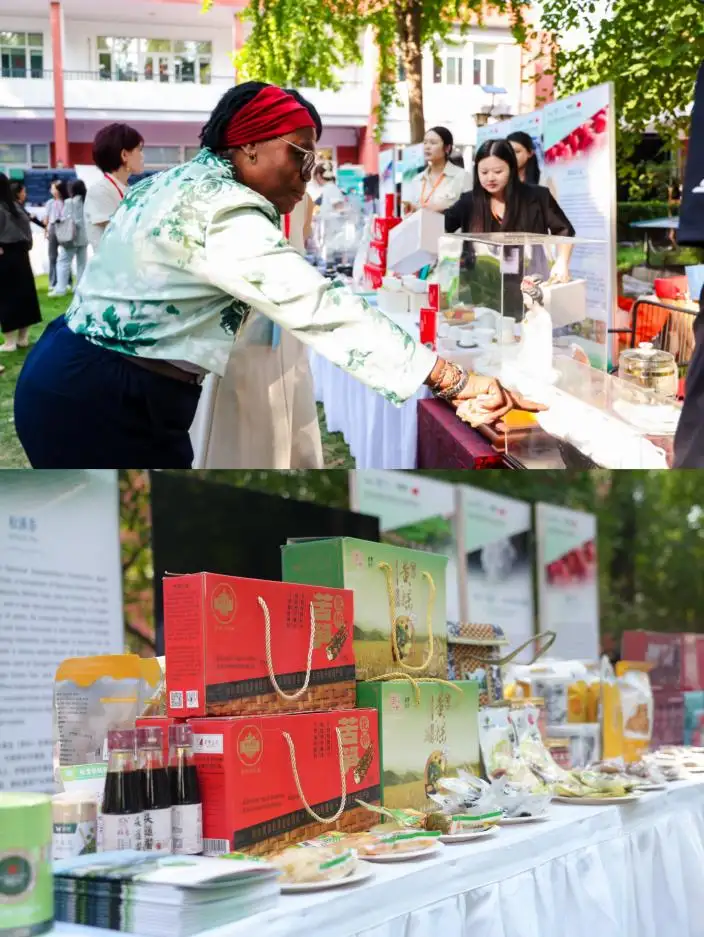
Dehua County, a mountainous county in southeast China's Fujian Province, brought white porcelain works including Flourishing Flower Basket and Quanzhou Nanyin (a sculpture inspired by UNESCO-listed Nanyin music from Quanzhou, a historic port city in Fujian), alongside wild red mushrooms, alpine tea oil and Chinese yam. Nii Quaye-Kumah, IFAD Representative in China, said he was "deeply impressed" by the exquisite ceramic artistry. Julio Worman, IFAD analyst for Latin America and the Caribbean, inquired about porcelain-making techniques and watched a tea ceremony. "Despite vast cultural differences between East and West, there are striking similarities," he said. "It was a wonderful tasting experience."
Dehua, one of the birthplaces of Chinese ceramic culture, is a national white porcelain hub with over 4,000 enterprises generating 76 billion yuan (approx. 7.9 billion / $10.7 billion) annually. It is China's largest producer and exporter of ceramic crafts, tea sets and planters. Dehua aims to share its porcelain's beauty with a wider international audience.
Songxi County, a rural county in Nanping City and its sole county-level exhibitor, presented century-old sugarcane pastries, Huaqiao bitter bamboo shoots (a local variety named after Huaqiao Township), Jiulong white tea (literally "Nine-Dragon White Tea"), green tea, black tea and matcha. Ama Brandford-Arthur, IFAD Global Coordinator for South-South and Triangular Cooperation, said Songxi had successfully linked rare germplasm resources, traditional farming and modern branding to bring mountain produce to market, a model with valuable lessons for the Global South.
Wu Wei, Secretary of Songxi County, said the exhibition offered a vital opportunity to advance opening-up and deepen international agricultural cooperation. Songxi will use the platform to absorb advanced ideas, pool quality resources and drive industrial upgrading.
Nestled between Wuyi Mountain (a UNESCO World Heritage Site) and Baishanzu National Park, Songxi is home to a sugarcane planting system first established in 1727 during the Qing Dynasty, with the mother cane still sprouting after nearly 300 years. Local teas hold national geographical indication certifications, and the Songxi bamboo sugarcane cultivation system is recognised as a China Important Agricultural Heritage.
During the event, guests discussed cross-border agricultural trade, technology exchange and value-chain enhancement. Both stands emerged as the most-visited, broadening international visibility and injecting fresh momentum into China's county-level speciality industries going global.